Posts

Showing posts from December, 2014

Energy : Green Market electric utilities , Results and the future , Energy transfer , History of energy transfer research , Components of the food web , The role of the microbial food web , Engineering and Designing a solution .
Image
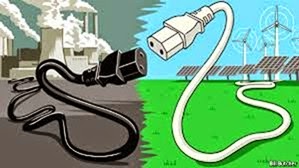
Green Market electric utilities In 1998, restructuring of the electric power utilities opened the market place to “Green Power Markets” that offer environmental features along with power service. Green power sources will provide clean energy and improved efficiency based on technologies that rely on renewable energy sources. Educating the consumer and providing green power at competitive costs are seen as two of the biggest challenges to this new market. The Center for Resource Solutions in California pioneered the Green-e Renewable Electricity Branding Program that is a companion to green power and certifies electricity products that are environmentally preferred. Results and the future Efforts to increase public consciousness about energy efficiency issues have had some remarkable successes in the past two decades. Despite the increasing complexity of most developed societies and increased population growth in many nations, energy is being used more efficiently in almost ever...

Energy : Energy efficiency , History of energy concerns , Energy efficiency in buildings , Transportation , Energy efficiency in industry and Other techniques for increasing energy efficiency

Image
Energy efficiency Energy efficiency refers to any process by which the amount of useful ene r g y obtained from some process is increased compared to the amount of energy put into that process. As a simple example, some automobiles can travel 40 mi (17 km) by burning a single gallon (liter) of gasoline, while others can travel only 20 mpg (8.5 km/l). The energy efficiency achieved by the first car is twice that achieved by the second car. In general, energy efficiency is measured in units such as mpg, lumens per watt, or some similar “output per input” unit. History of energy concerns Interest in energy efficiency is relatively new in the history of modern societies, although England’s eighteenth century search for coa l was prompted by the de- cline of the country’s forest resources. For most of the past century, however, energy resources seemed to be infinite, for all practical purposes. Little concern was expressed about the danger of exhausting the world’s supplies of coal,...

Energy : Physical energy budgets , Budgets of fixed energy , KEY TERMS and Resources Books.

Image
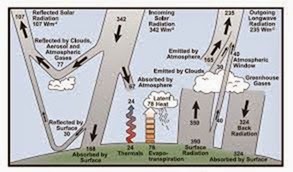
Physical energy budgets Physical energy budgets consider a particular, defined system, and then analyze the inputs of energy, its various transformations and storages, and the eventual outputs. This concept can be illustrated by reference to the energy budget of Earth. The major input of energy to Earth occurs as solar electromagnetic energy. At the outer limits of Earth’s atmosphere, the average rate of input of solar radiation is 2.00 calories per cm2 per minute (this flux is known as the solar constant). About half of this energy input occurs as visible radiation, and half as near-infrared. As noted previously, Earth also emits its own electromagnetic radiation, again at a rate of 2.00 cal/cm2/min, but with a spectrum that peaks in the longer-wave infrared, at about 10 æm. Because the rate of energy input equals the rate of output, there is no net storage of energy, and no substantial, longer-term change in Earth’s surface temperature. Therefore, Earth represents a zero-sum,...

Energy : Energy budgets , Forms of energy and Energy transformations and the laws of thermodynamics.

Image
Energy budgets An ene r g y budget describes the ways in which energy is transformed from one state to another within some defined system, including an analysis of inputs, outputs, and changes in the quantities stored. Ecological energy budgets focus on the use and transformations of energy in the biosphere or its components. Solar electromagnetic radiatio n is the major input of energy to Earth . This external source of energy helps to heat the planet , evaporate water , circulate the atmosphere and oceans, and sustain ecological processes. Ultimately, all of the solar energy absorbed by Earth is re-radiated back to spac e , as electromagnetic radiation of a longer wavelength than what was originally absorbed. Earth maintains a virtually perfect energetic balance be- tween inputs and outputs of electromagnetic energy. Earth’s ecosystems depend on solar radiation as an external source of diffuse energy that can be utilized by photosynthetic autotrophs, such as green plants, to ...

Energy : Magnetic energy and Sound, chemical, and nuclear energy

Image
Magnetic energy A magnetic is a piece of metal that has the ability to attract iron, nickel, cobalt, or certain specific other kinds of metal. Every magnet contains two distinct regions, one known as the north pole and one, the south pole. As with electrical charges, unlike poles attract each other and like poles repel each other. A study of magnets allows the introduction of a new concept in energy, the concept of a field. An energy field is a region in space in which a magnetic, electrical, or some other kind of force can be experienced. For example, imagine that a piece of iron is placed at a distance of 2 in (5 cm) from a bar magnet. If the magnet is strong enough, it may pull on the iron strongly enough to cause it to move. The piece of iron is said to be within the magnetic field of the bar magnet. The concept of an energy field was, at one time, a very difficult one for scientists to understand and accept. How could one object exert a force on another object if the two w...

Energy : Potential and kinetic energy , Conservation of energy , Forms of energy and Electrical energy

Image
Energy Energy is a state function commonly defined as the capacity to do w ork . Since work is defined as the movement of an object through a distanc e , energy can also be described as the ability to move an object through a distance. As an example, imagine that a bar magnet is placed next to a pile of i ron filings (thin slivers of iron meta l ). The iron filings begin to move toward the iron bar because magnetic energy pulls on the iron filings and causes them to move. Energy can be a difficult concept to understand. Un- like matte r , energy can not be taken hold of or placed on a laboratory bench for study. We know the nature and characteristics of energy best because of the effect it has on objects around it, as in the case of the bar magnet and iron filings mentioned above. Energy is described in many forms, including mechanical, heat , electrical, magnetic, sound, chemical, and nuclear. Although these forms appear to be very different from each other, they often have mu...

The eyes : ocular herpes simplex , ocular herpes zoster , ophthalmic examination , Physical Examination , Visual Acuity and Visual Field , Slit Lamp Examination , Tonometry , ophthalmoscopy , optical coherence tomography (OCT) , optic nerve , optic nerve atrophy and orbital cellulitis .

Image
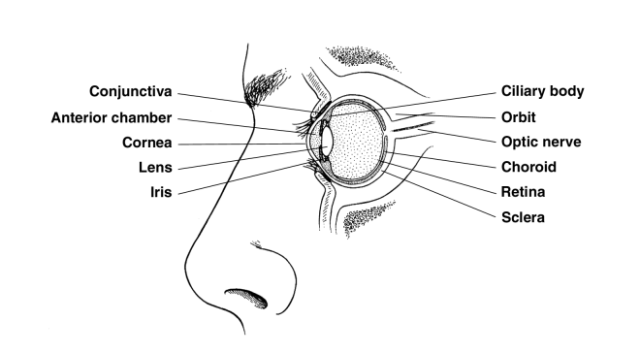
ocular herpes simplex An INFECTION of the eyes with HERPES SIMPLEX VIRUS 1 (HSV-1), which causes cold sores, or herpes simplex virus 2 (HSV-2), which causes GENITAL HERPES. The virus spreads to the eye to cause the initial infection via contamination from contact with an existing herpes sore elsewhere on the body. Ocular herpes simplex features similar eruptions of sores on the surface of the EYE and inside the eyelids. The sores are very painful and can cause permanent scarring of the CORNEA. About half of people who have one outbreak of ocular herpes simplex will experience a second; about 20 percent have persistently recurring infections, ranking ocular herpes simplex as the leading infectious cause of corneal destruction. A serious complication of ocular herpes simplex is stromal KERATITIS, in which the IMMUNE SYSTEM begins to attack the stromal cells that make up the cornea. This leads to scarring deep within the cornea, resulting in distortions of vision and diminished VISUAL ...

The eyes : night blindness and nystagmus .

Image
nearsightedness See MYOPIA. night blindness Impaired dark adaptation resulting from slowed photochemical reactions in the rods, the specialized cells of the RETINA that perceive contrast and detect visual images in low light. Night blindness becomes increasingly common after middle age. The person with night blindness may be unable to see at all in dim light or may experience delayed adjustment when going from a lighted environment to a dim or dark  environment. A diminished VISUAL FIELD with restricted peripheral vision also contributes to night blindness, as the outer edge of the retina where peripheral vision takes place contains mostly rods. There are not many treatment options for night blindness. Nutritional supplementation of vitamin A and the antioxidants LUTEIN and ZEAXANTHIN, which some studies show help maintain the health of the eye and improve the functioning of the rods, seem to aid some people. Adequate lighting when reading and especially when watching televi...

The eyes : lens , mydriasis and myopia .

Image
lens The primary focusing structure of the EYE, located in the center at the front of the eye. The lens is transparent, convex (rounded outward on each side), round, and flexible. A thin membrane encloses the lens. Tiny muscles at the front edges of its sides, the ciliary muscles, contract to flatten the lens and relax to thicken the lens. These adjustments alter light refraction (the angle at which the lens bends lightwaves entering the eye) to accommodate near and distant vision. The most common health conditions that affect the lens are PRESBYOPIA, in which the FLEXIBILITY of the lens diminishes with aging, and CATARACT, in which protein deposits cloud the lens and obscure vision. The lens is also vulnerable to accidental injury, particularly from blunt force (such as a baseball) or puncture. For further discussion of the lens within the context of ophthalmologic structure and function please see the overview section “The Eyes.” See also CATARACT EXTRACTION AND LENS REPLACE- ...