Posts

Showing posts from January, 2015

Answers to questions and summary of miniature and micro miniature repair procedures

Image
SUMMARY This topic has presented information on miniature and microminiature (2M) repair procedures and 2M safety precautions. The information that follows summarizes the important points of this topic. C O NF O R MAL COATINGS are protective materials applied to electronic assemblies to prevent damage caused by corrosion, moisture, and stress. C O NF O R MAL COATINGS REMOVAL is accomplished mechanically, chemically, or thermally, depending on the material used. Component LEAD S are terminated either through the board, above the board, or on the board. S O LDE R may be removed by wicking, by a manual vacuum plunger, or by a continuous vacuum solder extractor. ELECTR O N IC ASSEMBLIES should be restored to the original manufacturer's standards using the same orientation and termination method. A GOOD SOLDER JOINT is bright and shiny with no cracks or pits. When REPLACING DIPs , TOs , AND FLAT PACKS , make certain that pins are placed in the proper position. C O ...
Miniature And Micro miniature Repair Procedures: Safety, Electrostatic Discharge And Personal Safety.

Image
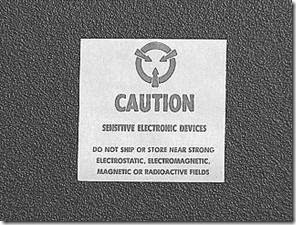
SAFETY Safety is a subject of utmost importance to all technical personnel. Potentially hazardous situations exist in almost any work area. The disregard of safety precautions can result in personal injury or in the loss of equipment or equipment capabilities. In this section we will discuss two types of safety factors. First, we will cover damage that can occur to electronic components because of electrostatic discharge (ESD) and improper handling and stowage of parts and equipment. Second, we will cover personal safety precautions that specifically concern the technician. ELECTROSTATIC DISCHARGE Electrostatic discharge (ESD) can destroy or damage many electronic components including integrated circuits and discrete semiconductor devices. Certain devices are more susceptible to ESD damage than others. Because of this, warning symbols are now used to identify ESD-sensitive (ESDS) items (figure 3-31). Fig u r e 3-31.—Warning symbols for ESDS devices. Static electricity is ...

Miniature And Micro miniature Repair Procedures: Repair Of Printed Circuit Boards And Cards.

Image
REPAIR OF PRINTED CIRCUIT BOARDS AND CARDS Removal and replacement of components on boards and circuit cards are, by far, the most common types of repair. Equally important is the repair of damaged or broken cards. Proper repair of damaged boards not only maintains reliability of the board but also maintains reliability of the system. Cards and boards may be damaged in any of several ways and by a number of causes. Untrained personnel making improper repairs and technicians using improper tools are two major causes of damage. Improper shipping, packaging, storage, and use are also common sources of damage. The source of damage most familiar to technicians is operational failure. Operational failures include cracking caused by heat, warping, component overheating, and faulty wiring. Before attempting board repairs, the technician should thoroughly inspect the damage. The decision to repair or discard the piece depends on the extent of damage, the level of maintenance authorized, o...

Miniature And Micro miniature Repair Procedures: Installation and Soldering of Printed Circuit Components, Soldering of PCB Components and Removal and Replacement of Dips.

Image
INSTALLATION AND SOLDERING OF PRINTED CIRCUIT COMPONENTS The 2M technician should restore the electronic assembly at least to the original manufacturer's standards. Parts should always be remounted or reassembled in the same position and with termination methods used by the original manufacturer. This approach ensures a continuation of the original reliability of the system. High reliability connections require thoroughly cleaned surfaces, proper component lead formation and termination, and appropriate placement of components on the board. The following paragraphs describe the procedures for properly installing components on a board including the soldering of these components. Termination Area Preparation The termination areas on the board and the component leads are thoroughly cleaned to remove oxide, old solder, and other contaminants. Old or excess solder is removed by one of the desoldering techniques explained earlier in this topic. A fine abrasive, such as an oil-fre...

Miniature and micro miniature repair procedures: removal and replacement of discrete components.

Image
REMOVAL AND REPLACEMENT OF DISCRETE COMPONENTS To properly perform the required repair, the 2M technician must be knowledgeable of the techniques used by manufacturers in the production of electronic assemblies. The techniques, materials, and types of components determine the repair procedures used. Interconnections and Assemblies Assemblies may range from simple, single-sided boards with standard-sized components to double- sided or multilayered boards with miniature and microminiature components. The variations in component lead termination and mounting techniques used by manufacturers present the technician with a complex task. For example, the 2M technician is concerned about the type of solder joints on the module. To determine the solder joint type, the technician must consider the board circuitry, hole reinforcement, and lead termination style. Recall the discussion from topic 1 on printed circuit board construction and the types of interconnections used. Single-sided an...